Verdict
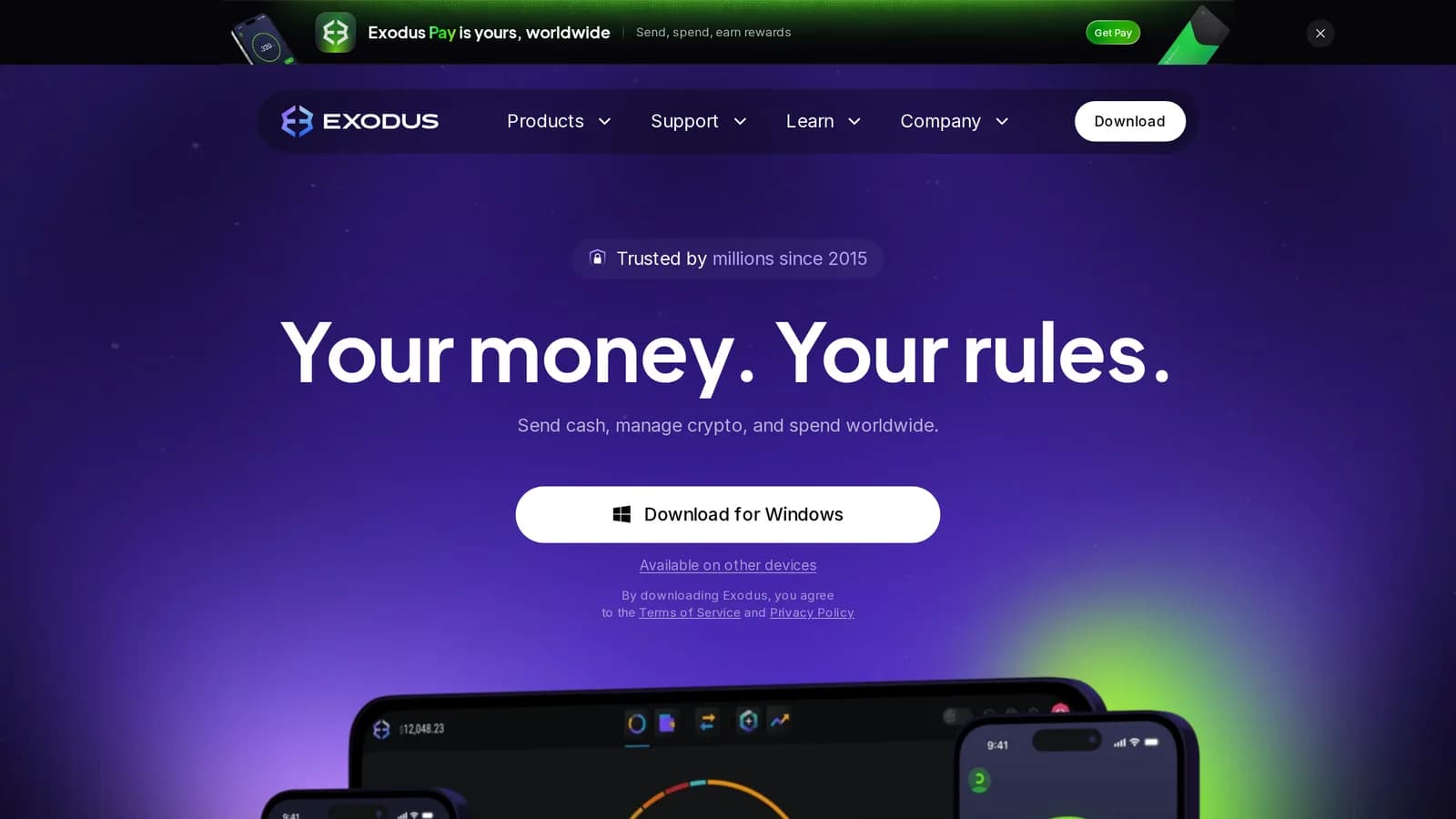
The best-looking multi-asset wallet on desktop, run by a publicly listed company, with a built-in exchange whose spread is the worst-value conversion path in this library. The design quality does not compensate.
- Best for
- Desktop users who prioritise interface over cost
- Cost
- Free; built-in exchange spread is wide
What works
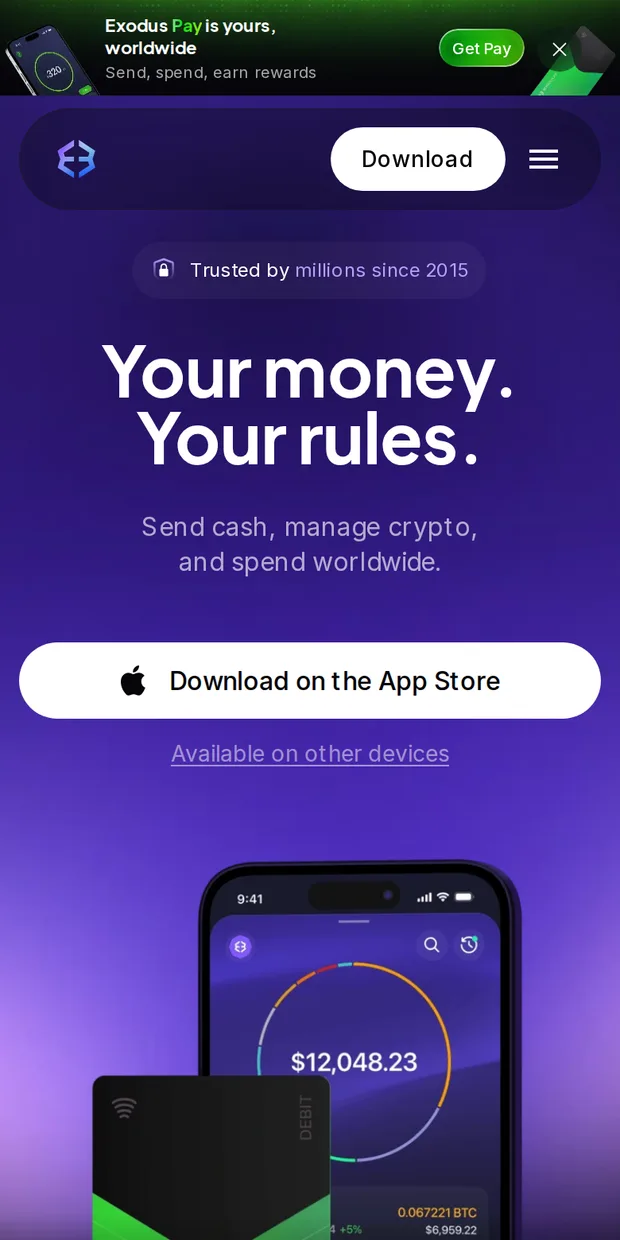
- Genuinely excellent desktop and mobile interface design
- Operated by a US-listed company with public financial reporting
- Broad asset support with portfolio tracking that works
- Hardware wallet pairing is supported for users who want it
What does not
- Closed source, so the security model is entirely trust-based
- Built-in exchange spread is far above any exchange or aggregator
- Staking is routed through partners at rates below going direct
- The free-to-use model is funded precisely by the conversion spread
Open Exodus and it is immediately obvious why people like it. The portfolio view is clear, the animations are smooth, the asset pages are well laid out, and nothing about it looks like it was built by developers for developers. In a category where the competition often resembles a debugging console with a logo, that counts for something real.
It counts for less than the spread does.
How it makes money
Exodus is free to download and free to use. The revenue comes from the built-in exchange, which converts assets through partners at a rate embedded in the quoted price. There is no fee line item — the cost is the difference between the rate you receive and the market rate at that moment.
That difference is consistently the widest of any conversion path reviewed in this library. Swapping $2,000 inside Exodus routinely costs more than a Trezor Safe 3, which would have removed the need to hold the assets in a hot wallet in the first place.
A wallet with no visible fees is not a wallet with no fees. It is a wallet where the fee is inside the price, and you are not meant to work out how big it is.
Closed source
The code is not published. You are trusting the company's claims and its auditors entirely, with no path to independent verification of what the software does with your keys.
Exodus is a US-listed company with public financial statements and a real reputation to protect, which is a meaningful mitigation and is not the same thing as verifiability. Trezor and Rabby let you check. Exodus asks you to believe, and prices the asking well above the free alternatives that do not.
What it does well
Asset coverage across many chains in one clean interface, without the setup work competitors require.
Portfolio tracking that is accurate, fast and pleasant to look at.
Hardware wallet pairing, which turns it into a front end for keys held elsewhere — comfortably the best way to use this product.
Customer support that responds, which is not universal in free wallet software.
Staking
Staking is offered for several assets through partner arrangements, and the rate delivered is below what the same asset earns when staked directly. Convenient, and priced as such — the pattern repeats across every service this wallet offers.
Verdict
Being a listed company
Exodus took the unusual step of listing its shares publicly, which means it files audited financial statements and discloses where its revenue comes from. Anyone who wants to know how much of this company's income depends on the conversion spread can read the answer rather than infer it.
That transparency is real and it sits oddly beside a closed-source wallet. You can audit the business and not the software, which is the opposite of the arrangement most security-conscious users would choose.
How to quantify the spread yourself
Note the market price of both assets on a reference venue at the moment you request a quote.
Record exactly what you send and exactly what arrives.
Compute the difference as a percentage of the amount sent — that is your all-in cost.
Compare it against the same trade on an aggregator plus the network fee.
Do this once with a small amount. The result is usually larger than people expect, and it is the only way to see a cost that is never displayed as a number anywhere in the interface.
Who this is actually right for
There is a legitimate user: somebody who wants a clear portfolio view across many assets, is holding rather than trading, and is pairing the wallet with a hardware device so the keys are not the risk. For that person Exodus is pleasant, capable and effectively free.
The person it is wrong for is the one it is designed to capture — a newcomer who will use the built-in exchange because it is right there, and will never learn what that convenience cost them.
Score: 6.4 — the lowest score in this category. Not because it is insecure or badly made; it is neither. Because every function it charges for is cheaper elsewhere, the code cannot be inspected, and free alternatives do the same job with better risk disclosure. If you love the interface, pair it with a hardware wallet and never press the exchange button.