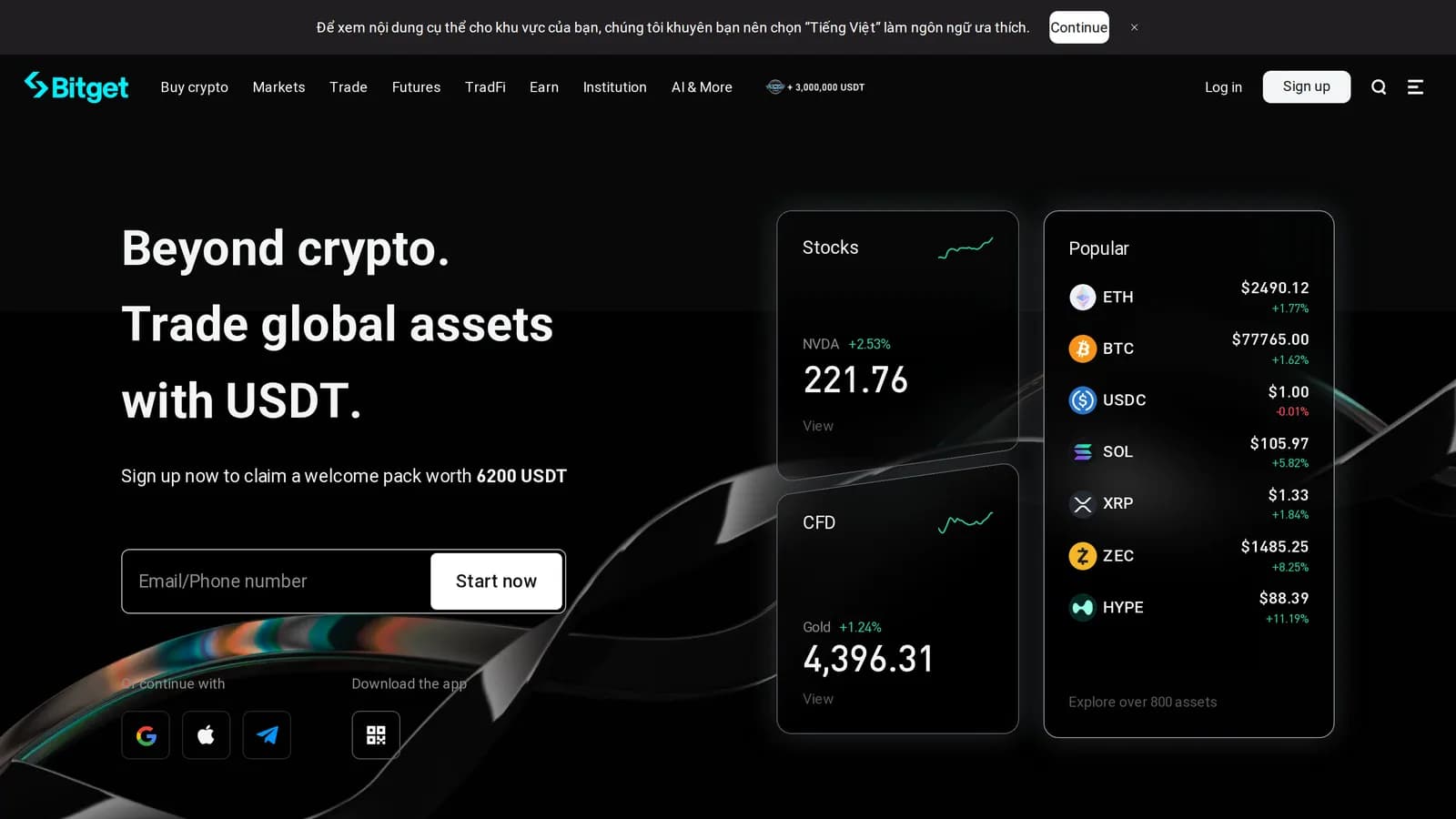
Verdict
Bitget built its growth on copy trading and it shows — the social layer is the most developed in the category. As a plain exchange it is competent and unremarkable, and the copy product's economics deserve more scepticism than the leaderboard invites.
- Best for
- Traders who want a well-built copy-trading layer
- Cost
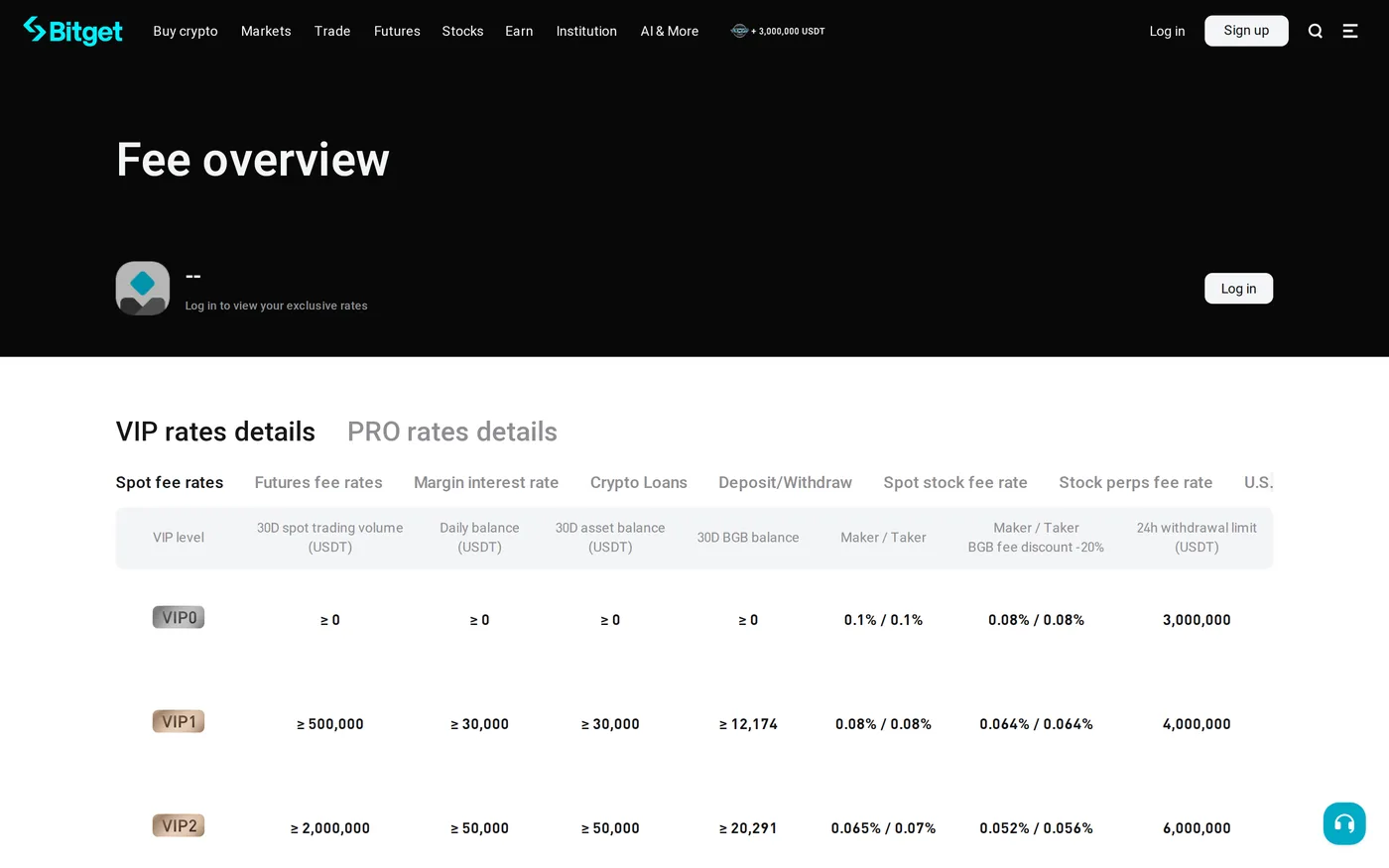
- 0.10% spot, 0.02%/0.06% futures
What works
- Copy trading is properly built: filters, drawdown history, position sizing
- Standard 0.10% spot fee with no unpleasant surprises
- Publishes a protection fund and a monthly Merkle-tree reserve report
- Futures liquidity on majors is genuinely competitive
What does not
- Leaderboards select for survivorship and reward volatility
- Copy-trading profit share is charged on gross winning trades, not net performance
- Airdrop and launchpad campaigns dominate the interface
- Regional entity structure is as opaque as its offshore peers
Bitget is a competent mid-large exchange that happens to have the best copy-trading implementation in the industry. Evaluating it honestly means evaluating that product honestly, because everything else about the venue is category-standard and would earn a shrug on its own.
The exchange underneath
Spot is 0.10% both sides at base tier. Futures run around 0.02% maker and 0.06% taker. Depth on BTC and ETH perpetuals is real, and the funding mechanism behaves normally under stress — funding spikes when it should and mean-reverts rather than staying pinned. There is a published protection fund and a monthly Merkle-tree reserve report covering the main assets.
None of this is distinctive. It is fine, and fine is enough for the exchange to be a legitimate venue for the trading you are going to do anyway.
Copy trading, and how it is priced
The mechanics are good. You can filter traders by realised drawdown rather than just return, see historical position sizing, cap what you allocate, and set your own stop conditions independent of the trader you follow. Most competitors give you a leaderboard and an allocate button, and hope you do not look further.
The economics deserve a harder look. The lead trader takes a profit share, typically around 10%, charged on winning trades. Not on net performance across the period — on the winners. A trader who makes ten profitable trades and eleven losing ones can still collect a share from you while your account is down.
A profit share charged per winning trade rather than on net performance is a fee structure that pays for volatility. It is not a scam; it is just not aligned with you.
What the leaderboard does not show
Survivorship. Traders who blew up are not in the list you are choosing from, and the list is the only thing you can see.
Position size relative to their own capital. A 400% return on $800 is not a track record, it is a coin flip that landed.
Correlation. Following five traders who are all long the same three altcoins is one position, not five, and it will unwind as one position too.
Regime. A strategy with an excellent twelve-month record may have been tested by exactly one market condition.
If you are going to copy trade, filter on maximum drawdown and time in market first, return second, and assume the displayed history is the best-case version of a strategy you cannot inspect.
The rest of the interface
Launchpads, airdrop campaigns and seasonal promotions take up a great deal of space. The pattern is familiar from Binance: acquisition is driven by giveaways, and the trading product has to fight for attention on its own front page. For an experienced user this is noise. For a new one it is a set of doors that all lead somewhere more expensive than a spot order.
How it compares
Against OKX and Binance, Bitget is comparable on fees and behind on depth outside the majors. Against eToro — the other serious social-trading product in this library — it is far cheaper per trade and far less regulated. Those are the two poles of the copy-trading market and neither is obviously right.
Verdict
The protection fund
Bitget publishes a protection fund intended to cover losses from platform failures, with the balance reported periodically. It is a real commitment and it is a company policy rather than a legal guarantee, in exactly the way Binance's SAFU fund is.
The useful question is not whether the fund exists but what would trigger it and who decides. Neither is specified in a way you could rely on in a dispute. Read it as evidence of intent and capital, not as insurance.
If you are going to copy trade anyway
Allocate a fixed amount you would be comfortable losing entirely, and never top it up to chase a drawdown.
Filter on maximum drawdown and months active before you look at a single return figure.
Check whether the trader's history includes a full drawdown cycle or only a rising market.
Set your own stop condition independent of the trader — Bitget supports this, and most followers never configure it.
Review monthly. A strategy that changed character is more dangerous than one that is simply losing.
Done that way, copy trading is a reasonable way to allocate a small sleeve of a portfolio. Done the way the leaderboard invites, it is an expensive way to find out about survivorship bias.
Score: 7.3. A solid exchange with a best-in-class implementation of a product most people should use less than they do. If you understand the profit-share mechanics and size positions yourself, the tooling is genuinely useful. If the leaderboard is doing your thinking, the tooling is a liability with a good interface.