Verdict
Two products under one brand: a polished consumer app that charges a spread most users never notice, and a competent exchange hidden behind it. The card programme has been repriced downwards repeatedly and should not factor into your decision.
- Best for
- Consumers who want a card and an app in one place
- Cost
- 0.25%/0.50% on Exchange, spread on the App
What works
- The consumer app is genuinely well designed and easy to use
- The separate Exchange product has a reasonable maker/taker ladder
- MiCA authorisation through Malta gives EU users a named regulator
- Fiat rails and card spending work reliably in supported countries
What does not
- App purchases carry a spread that is not presented as a fee
- CRO staking requirements for the best card tiers have been cut repeatedly
- Exchange and App are separate balances, which confuses new users
- Marketing spend vastly exceeds product differentiation
Ask most people what Crypto.com is and they will describe an advertisement. That is a fair reflection of where the money went and an unfair reflection of the product, which is better than the marketing deserves and worse than the marketing implies.
There are two of them
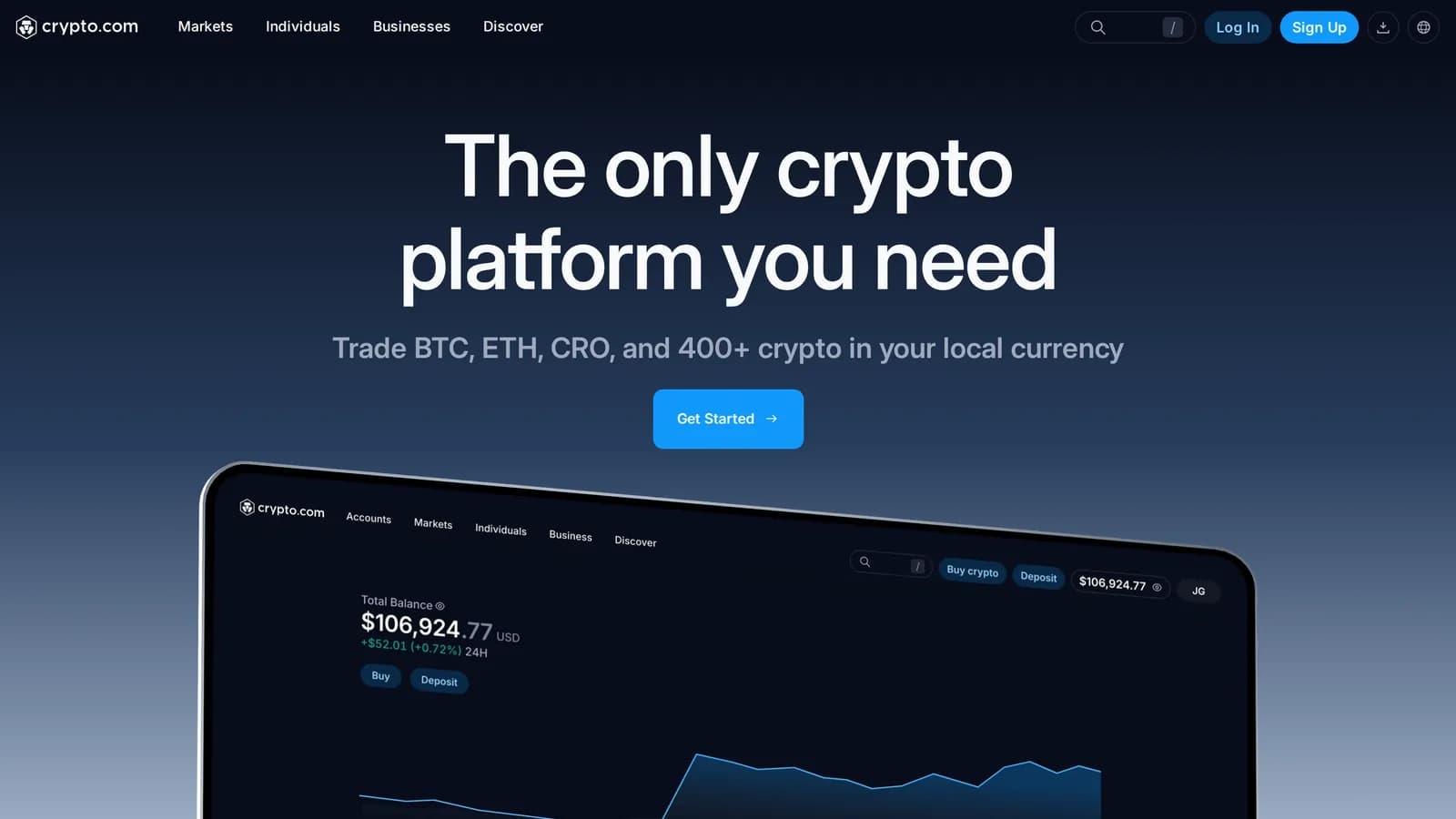
The App is the consumer product: buy, sell, spend on a card, stake, earn. The Exchange is a separate order-book venue with its own balance, its own fee schedule and its own login flow, inside the same brand.
New users overwhelmingly end up on the App, where purchases execute against a quoted price that embeds a spread. There is no line item called 'fee', which is exactly the problem: a cost you cannot see is a cost you cannot compare against anything.
The Exchange charges a conventional maker/taker ladder starting around 0.25% maker and 0.50% taker at the entry level, improving with volume and with CRO staked. That is not cheap against Binance or OKX, but it is transparent, and it is cheaper than the App for anything above a trivial order. Moving between the two requires an internal transfer that the interface does not encourage.
The card, and its history
The Visa card programme was the original growth engine: stake CRO, receive cashback and subscription rebates on services like streaming platforms. Those terms have been revised downward more than once — rebate categories removed, staking requirements raised, effective cashback cut.
The lesson is not that the company acted in bad faith. It is that a rewards programme funded by a token's price is a rewards programme that adjusts when the price does. Do not lock capital into a staking tier on the assumption that the benefits are contractual, because they are not.
Any reward funded by an emission schedule is a forecast, not a rate. The company can change it and eventually will.
Regulation
Crypto.com has pursued licensing more energetically than most of its peers, including a MiCA authorisation via Malta covering EU operations, alongside registrations in several other jurisdictions.
For a European user, that means a named regulator, a defined complaints path and capital requirements. It is a real improvement over an unregistered offshore entity, and it is the strongest argument for using this platform rather than a cheaper one.
Where it is genuinely good
Onboarding. The KYC flow is faster and clearer than almost anything else in this library.
Fiat rails in supported countries, including card spending that works without drama.
The mobile interface, which is legitimately well designed and does not behave like a trading terminal pretending to be an app.
Customer support response times, which are better than the offshore median.
Where it is not
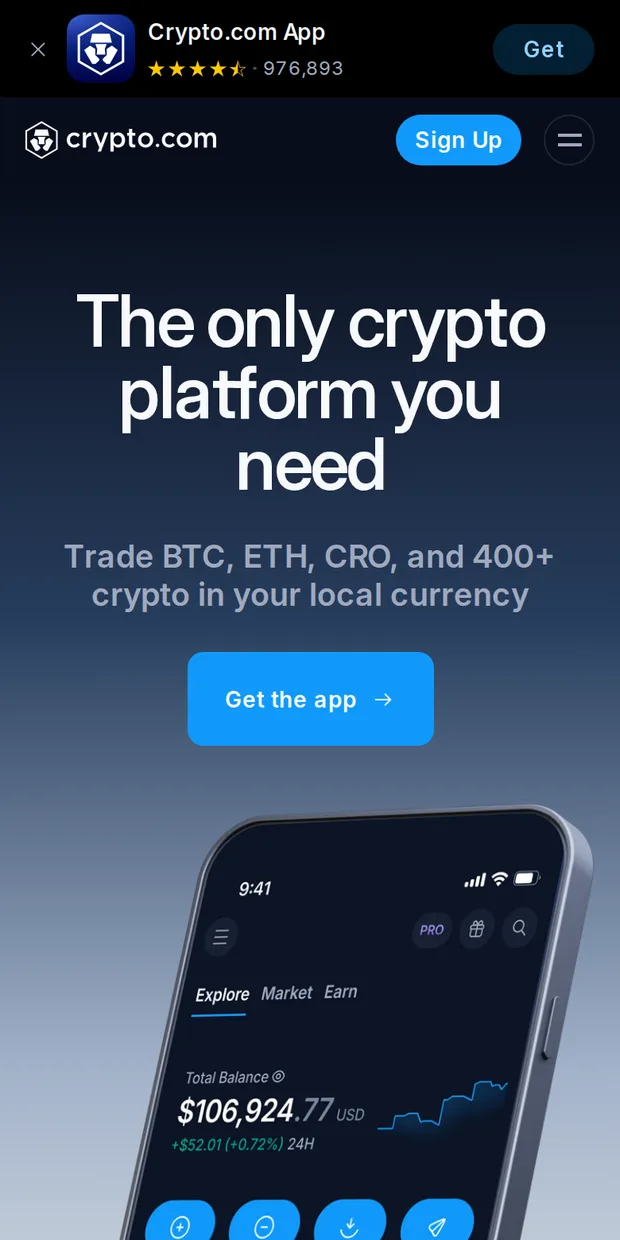
The two-balance structure is a persistent source of confusion, and the app does not explain it. Users regularly believe they have bought on the Exchange when they have bought in the App at several times the cost.
Earn products carry the usual exchange-yield caveats, and the history of this category — including firms that no longer exist — should inform how much of your balance sits in them.
Verdict
The card, practically
For a card that actually works in shops, the mechanics matter more than the headline cashback. Spending converts crypto to fiat at the point of sale, which is a disposal in most tax jurisdictions — every coffee is a taxable event that somebody has to reconcile later.
That is not a reason to avoid the card. It is a reason to fund it with a stablecoin rather than a volatile asset, so the gain or loss on each transaction is negligible and the record-keeping is trivial. Almost nobody does this and almost everybody should.
Earn, staking and the 2022 lesson
Crypto.com survived the 2022 credit collapse that took down several of its peers, and it did so without freezing customer withdrawals, which deserves acknowledgement. Its Earn products remain the same category of instrument that failed elsewhere: your assets, lent out, at a rate the platform sets.
The company came through that period intact. That is evidence about this company's risk management and not evidence that the product category is safe, and those are different claims.
Score: 7.0. If you want one app that holds a small crypto balance and issues a card, this is a reasonable choice and you should accept the spread as the price of convenience. If you are buying more than pocket money, move to the Exchange side where the cost is at least written down. Ignore the sponsorships entirely — they tell you about the advertising budget, not the balance sheet.